

Protect Your Home From Hidden Water Damage
A leaking central heating system is one of those problems that can quietly cause significant damage to your home before you even realise there’s an issue. Water damage can be costly to repair, and it can also affect your heating system’s efficiency, leaving your home cold and uncomfortable. At RJG Heating and Plumbing Ltd, we’ve helped countless homeowners in Surrey identify and resolve heating leaks quickly, preventing expensive damage and restoring their systems to peak performance.
In this guide, we’ll walk you through everything you need to know about central heating leak detection, including how to spot the signs, what causes leaks, and when to call a professional.
How to Spot a Central Heating Leak
The key to preventing serious damage is catching a leak early. Here are the most common signs that your central heating system may have a leak:
- Water Stains and Discoloration – Look for unexplained water marks on your ceilings, walls, or floors, particularly around pipes, radiators, and boiler cupboards. These stains often appear as brown or yellowish discoloration and can indicate slow, ongoing leaks.
- Damp Patches and Moisture – Feel the area around your radiators, pipework, and boiler. If you notice persistent dampness or moisture on walls or floors, this could be a sign of escaping water. Pay special attention to areas under windows where radiators are typically located.
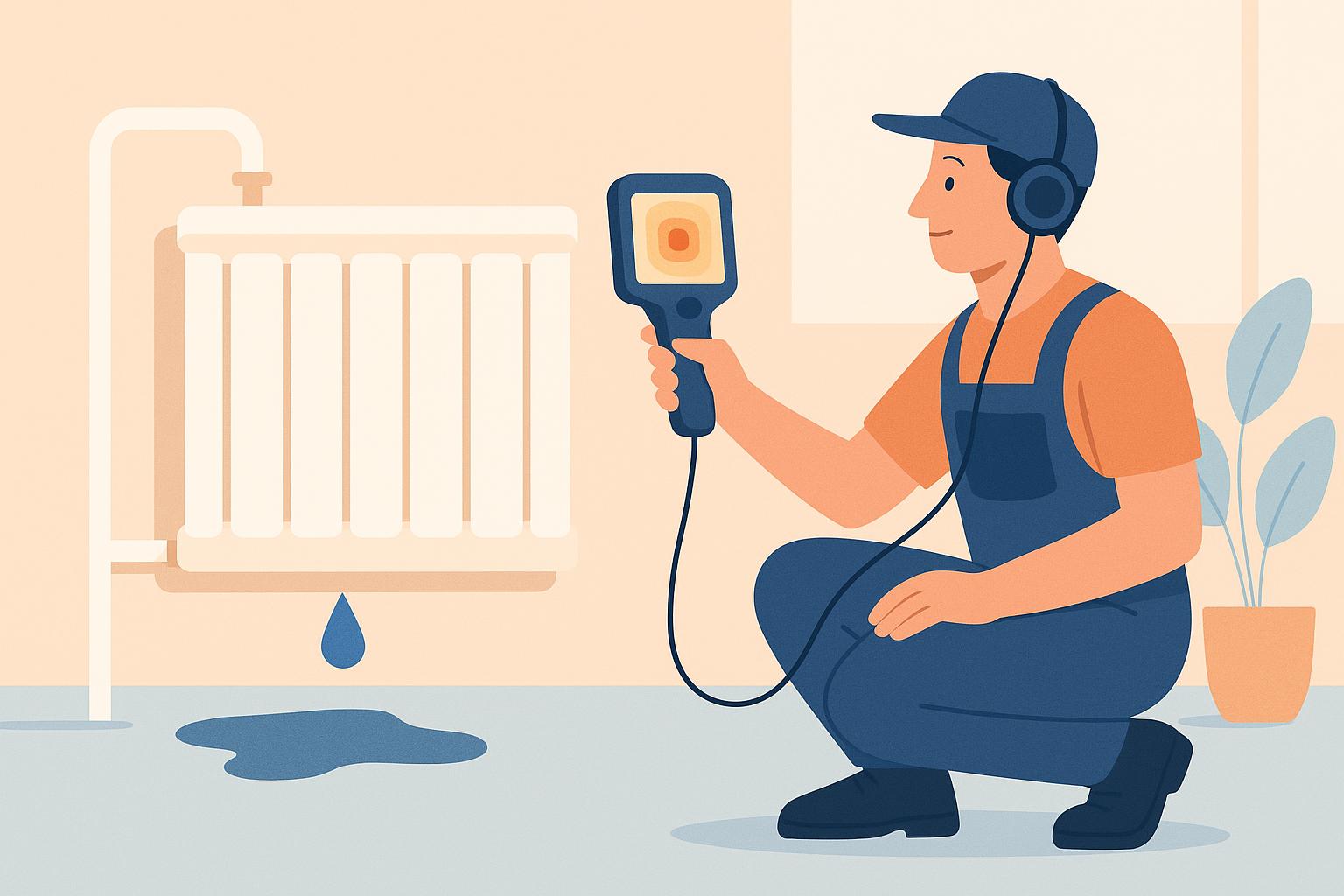
- Pooling Water – Visible pools of water underneath pipes, radiators, or your boiler are a clear indication of an active leak. Even small puddles shouldn’t be ignored—they suggest water is escaping from your heating system.
- Declining Boiler Pressure – Modern boilers have a pressure gauge on the front. If you notice the pressure is dropping regularly and you’re frequently topping it up (using the filling loop), you likely have a leak somewhere in the system. This is one of the most reliable indicators of a problem.
- Unusual Noises – Hissing, gurgling, or whistling sounds from your heating system can indicate a leak, especially if they’re accompanied by other symptoms on this list.
- Musty Smells – Persistent damp or musty odors, particularly in cupboards or near radiators, may suggest water damage and hidden moisture.
- Reduced Heating Performance – If your home is taking longer to heat up than usual, or certain radiators aren’t warming as they should, it could be due to a leak allowing water to escape before it reaches all the radiators.
What Causes Central Heating Leaks?
Understanding the underlying causes can help you understand why leaks happen and how to prevent them in the future.
- Corroded Pipes – Older heating systems often have steel pipework that can corrode over time, especially if the system contains oxygen or the water isn’t properly treated. Corrosion weakens pipes, leading to pinhole leaks.
- Damaged or Worn Joints – The connections between pipes (joints and fittings) can weaken or fail due to age, vibration, or poor installation. These are common leak locations.
- High System Pressure – If your boiler’s pressure is too high, it places excessive stress on pipes and fittings, increasing the risk of leaks.
- Frozen Pipes – During freezing weather, water in exposed pipes can freeze and expand, potentially causing cracks or splits that leak when the temperature rises.
- Faulty Radiator Valves – Thermostatic radiator valves (TRVs) and manual radiator valves can wear out or fail, causing water to weep from connections.
- Poor Installation – Substandard pipework installation or using incorrect materials can lead to leaks developing over time.
- Chemical Corrosion – Without proper inhibitor treatment in the water, pipes can develop internal corrosion that weakens them from the inside.
What to Do If You Suspect a Leak
If you notice any of the warning signs above, here’s what you should do:
- Stop the Leak – If you spot water actively pooling, you can turn off your boiler immediately to prevent more water escaping. However, don’t leave it off long-term, as your system may need pressure balancing.
- Document the Problem – Take photos of any water damage, stains, or pooling water. This information will help your engineer diagnose the problem more quickly.
- Check Your Boiler Pressure – Look at the pressure gauge on your boiler. Note the reading and share this information with your engineer – it’s a key diagnostic tool.
- Don’t Delay – Even small leaks can become major problems. Water damage compounds over time, so it’s important to get professional help quickly.
Repairing Central Heating Leaks
Once we’ve identified the source of the leak, we’ll discuss your repair options with you. Common solutions include:
- Sealing Small Holes – Minor pinhole leaks in pipes can often be sealed with epoxy putty or specialized repair compounds, depending on the location and severity.
- Replacing Faulty Valves – If the leak is coming from a radiator valve, we can simply replace it without affecting the rest of your system.
- Pipe Replacement – For corroded or damaged sections of pipework, we may recommend replacing the affected section. This is a common solution for older systems with deteriorating pipes.
- System Treatment – Adding corrosion inhibitor to your heating system can help prevent future leaks and extend the life of your pipes and components.
- Boiler Inspection – If the leak is at or near your boiler, we’ll conduct a thorough inspection to ensure the boiler itself isn’t damaged.
Preventing Future Leaks
Once we’ve fixed your leak, you can take steps to protect your heating system:
- Regular Servicing – Annual boiler servicing helps identify potential issues before they become problems. Our service includes checking pipework and connections.
- Maintain System Pressure – Check your boiler pressure regularly. It should typically be between 1 and 1.5 bar. If you’re frequently topping up pressure, contact us for an inspection.
- Add Inhibitor – Ensure your heating system contains an appropriate corrosion inhibitor. We recommend checking the inhibitor level every few years.
- Insulate Pipes – Insulating exposed pipes, particularly in attics, basements, and external walls, helps prevent freezing and reduces heat loss.
- Monitor for Changes – Keep an eye on your boiler’s pressure gauge and listen for any unusual noises. Catching changes early can prevent major problems.
Why Choose RJG Heating and Plumbing for Leak Detection?
At RJG Heating and Plumbing Ltd, we bring years of experience in identifying and repairing central heating leaks. Every member of our team is Gas Safe registered, ensuring your system is in safe, capable hands. We provide thorough inspections, honest recommendations, and fair, fixed-price quotes – with no hidden costs or sales pressure.
Whether you’re dealing with an obvious leak or suspect a hidden problem, we’re here to help. We serve Addlestone, Shepperton, and the surrounding areas across Surrey, and we’re committed to getting your heating system back to optimal performance quickly and efficiently.
Get Your Heating System Checked Today
If you suspect a leak in your central heating system, don’t wait. Contact RJG Heating and Plumbing Ltd today for a professional inspection. Call us on 01932 885735 or request a call back. We’ll identify the problem, explain your options, and get your system working reliably again.
Your comfort and safety are our priority – trust the experts to keep your home warm and dry.